Do you want to connect better with people at work or at home?
Research indicates that approximately 75% to 80% of the problems we face at home and at work—from high attrition rates in the office to hurt feelings at home—can be solved through better communication.
Think about that for a second — you may be able to solve 75% to 80% of the problems you face by simply learning to be a better communicator.
Mind boggling.
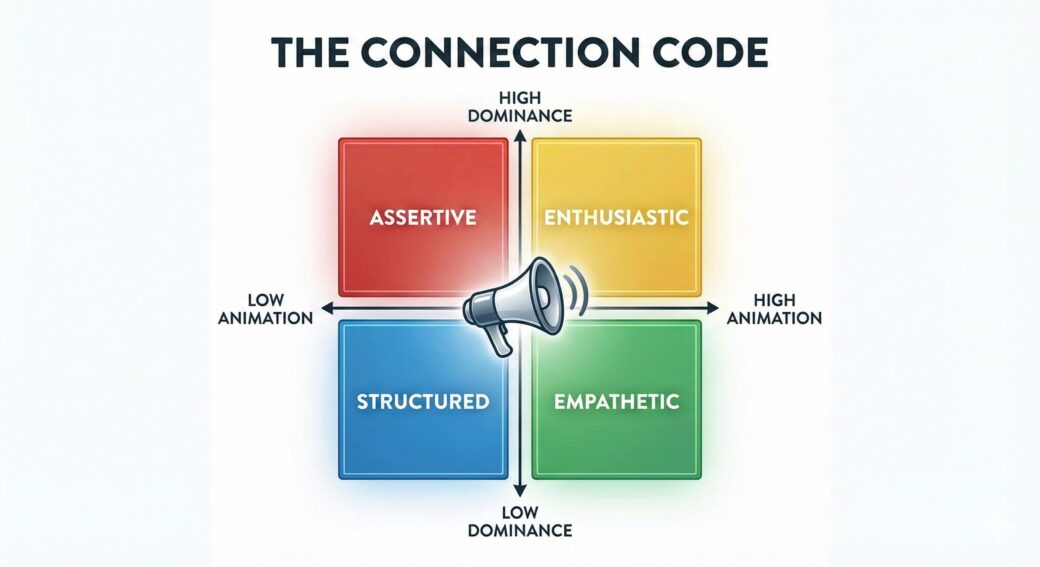
To help people solve this problem, I developed the Connection Code, a matrix designed to help you identify and adapt to four distinct communication styles. (The Connection Code is based on research originally done by Dr. Eileen Russo.)
You can learn more about the Connection Code in my book “Better: Discover a New and Improved You” published by Vibrant Publishing. In the meantime, here’s a quick snapshot.
Understanding the Four Styles
Most people fall into one of four quadrants based on their levels of dominance and animation:
- Assertive: High dominance, low animation. These individuals are direct, data-focused, and view small talk as an inefficiency.
- Enthusiastic: High animation and expressive. They are the storytellers and big-idea thinkers who bring energy and optimism to a room.
- Empathetic: Thoughtful and perceptive listeners. They prioritize personal connection and are often the “glue” that holds teams together.
- Structured: Logical and precise. They value accuracy, organization, and methodical processing above all else.
How to Adapt in Real-Time
Here is how you can “decode” your delivery based on who you are talking to:
- When speaking to an Assertive person: Respect their time. Skip the fluff, get to the point quickly, and use plain, direct sentences.
- When speaking to an Enthusiastic person: Praise their energy, but keep them focused. Use an agenda to ensure their “big ideas” translate into specific action steps.
- When speaking to an Empathetic person: Show sincere interest in their feelings and thoughts. Resolve conflicts quickly and reassure them that your business opinions are not personal.
- When speaking to a Structured person: Be like Spock—rely on logic and facts. Give them the time and space they need for research and analysis before demanding a decision.
The Secret: You Do the “Heavy Lifting”
The most critical takeaway of the Connection Code is this — if you want to do a better job connecting with others, then you have to adapt to their style of communication, not the other way around.
You can’t expect others to change their nature to suit yours. You need to speak the “language” of the person you are talking to if you want the conversation to work.
Conclusion: Build Your Bridge
Whether you are leading a team through industry shifts or trying to connect with a partner at home, the Connection Code provides the blueprint. By identifying the style of the person in front of you and doing the heavy lifting to meet them where they are, you transform “miscommunication” into “meaningful connection.”
Good luck. And keep me posted on your progress using the Connection Code.

Want to dive deeper into the Four Ms of Leadership? My new book, Better: Discover a New and Improved You, features the full Connection Code and more frameworks to help you master the unspoken rules of success.